The Bench and the Pause: What Makes a Green Feel Shared
A shared green needs more than a bench. Learn how seating position, clear approaches, shade, and upkeep can make a pause feel comfortable and welcoming.
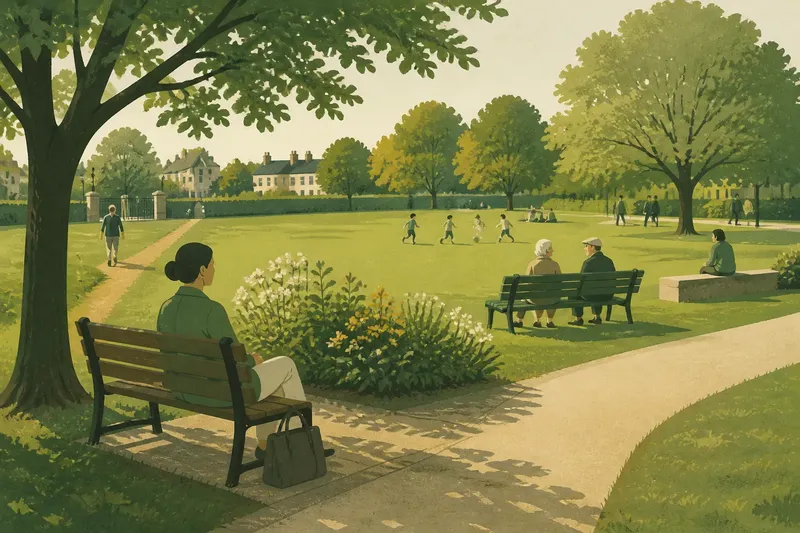
The most common mistake on a shared green is putting a bench wherever there is room and expecting people to use it. A seat beside a muddy shortcut or under a dripping branch can turn a simple rest into an awkward choice. Good seating makes room for different ways of being there: watching the day unfold, chatting with a neighbor, or sitting alone without feeling on display.
For anyone considering how to make a shared green more welcoming, the useful question is not simply where a bench fits. It is what people can do comfortably once they arrive, and whether the place gives them a genuine choice.
Give a seat a view without making it a stage
A bench aimed at a fence may be usable but offer little reason to linger. One facing directly into a busy play area can make every sitter feel part of the action. A view of a mature tree, a flower bed, or the shifting light across a lawn gives the eye somewhere to rest without demanding conversation.
Try the view from sitting height. Check whether a sign, bin, or parked bicycle blocks it, and listen for the sounds that reach the seat: conversation, birds, or a ball game. A lively scene can be enjoyable, but visitors should also have a quieter option.
Two seats facing each other can invite a conversation; a seat turned slightly toward the green can leave room for a greeting without requiring one. Like chairs around a kitchen table, their direction quietly shapes what people feel invited to do.
Keep a resting place distinct from a shortcut
People may cross a green by the route that feels most direct, even if it is not the paved path. When that route runs close behind a bench, a sitter may feel footsteps at their back, while someone leaving the seat can end up in the way. The issue is not that anyone is using the green incorrectly. The spot simply asks two ordinary activities to share too little space.
Notice where people walk between the gate, a bus stop, or the edge of the lawn. Look for worn grass and muddy tracks, which can indicate that the formal route feels inconvenient. A bench placed across a common line of travel may discourage both sitting and passing.
If the seat is crowding a route, consider turning it or moving it away from the busiest crossing. Low planting or a change in paving can mark a gentle edge, provided it does not block views or make the route harder to use. Keep access for wheelchairs, strollers, and mobility aids in mind; consult the relevant local authority or a qualified professional when rules or access requirements are unclear.
Offer different ways to stop and sit
A long bench gives a group room to gather, but it may feel like joining a conversation already underway to someone arriving alone. Seats that all face one another can put pressure on every pause to become social. A mix of arrangements lets visitors choose.
A group bench, a separate angled seat, and a firm, level edge can serve different kinds of rest, as long as each leaves the route clear. Think about what the spot supports: a quick pause, a quiet view, or a conversation between neighbors.
Say a neighborhood green has one bench directly beside a shortcut. Caretakers notice that sitters move when a group passes and that muddy footprints gather near the seat. They move the bench beneath a nearby tree, angle it toward the lawn, and keep the shortcut open. During a reversible trial, they can check whether the path stays clear, whether the bench remains usable after rain, and whether visitors can sit and leave without crossing one another. If the route still feels cramped, they can turn the seat again or choose another position; the observations, not an assumed improvement, guide the next decision.
Make the approach as comfortable as the seat
A bench can be sturdy and still be hard to use. Loose gravel, exposed roots, or a puddle at its edge can make reaching it uncomfortable. A backrest and arms suit some visitors, while others prefer a place to perch briefly. Shade can make a seat pleasant on a warm afternoon, but a canopy that leaves it wet after rain can limit its use.
Notice the spot in different conditions rather than judging it on one pleasant day. Check for loose slats, litter, and overflowing bins, too. A clear way to report repairs and a named maintenance responsibility can help prevent a welcoming seat from becoming neglected.
- Check whether the ground at the seat is firm and even; if it is, keep the approach clear, and if it is loose or rutted, ask the responsible caretaker to address it before encouraging more use.
- Check whether a puddle or dripping canopy leaves the seat wet; if it stays dry after ordinary rain, keep its position, and if it remains damp, consider another spot or a different shade arrangement.
- Check whether the seat faces a useful view or a blank barrier; if visitors can see the green comfortably, retain its direction, and if the view feels closed off, try a reversible turn.
- Check whether people routinely pass close behind the seat; if they have room to pass without brushing it, leave the arrangement in place, and if they crowd the sitter, shift or angle the bench while preserving the route.
- Check whether a solo visitor has an option apart from a group bench; if a separate pause is available, keep the variety, and if not, consider adding or repositioning a seat only when its upkeep is assigned.
- Check whether loose slats, litter, or a full bin make the spot feel neglected; if the seat and nearby area are cared for, continue the routine, and if not, report the issue to the responsible maintenance contact.
What should you notice before changing a seating spot?
How can a bench welcome someone arriving alone?
Offer at least one seat where a visitor can see activity without sitting at its center. A clear approach and room to place a bag can make a short rest feel ordinary rather than conspicuous.
Should seats face each other or the green?
Choose according to the activity the spot should support. Seats facing one another suit conversation, while a seat turned toward the green gives visitors a quieter choice.
How can neighbors tell whether a seating change helped?
Observe whether people can sit, pass, and leave without crowding, and whether the place stays usable in different weather. Ask visitors what feels comfortable or awkward, treating their comments as useful information rather than a vote for one arrangement.
Who should weigh in on access and upkeep?
Include people who use the green at different times, including those who may not linger long enough to attend a formal meeting. Ask the local authority or a qualified professional when access rules, installation, or maintenance responsibilities are uncertain.
When a popular spot causes friction, change one thing at a time
A lively green can still have an uncomfortable corner. A nearby game may make one seat too noisy for a quiet rest, or a gathering spot may leave little room for someone who wants solitude. Name the specific problem first: a route squeezed beside a bench, a lack of shade, or a view that puts sitters on display.
Then try a small, reversible change where practical. Turn a bench before relocating it, clear an obstruction before changing the route, or adjust a maintenance routine before seeking new furniture. Check the result at different times and consider whether the change helps one group while making the green less usable for another.
A shared green becomes welcoming through details people can feel: a view worth pausing for, a route that stays open, and a seat that does not demand an explanation. For anyone shaping a shared green, the best position is the one that lets different visitors use the same place in their own way.