Before the First Guest Arrives: The Small Rituals of a Community Supper
Community supper rituals make seasonal gatherings easier to join, with clear invitations, thoughtful food handling, and simple ways for everyone to take part.
The most common community supper mistake is treating the meal like a potluck with a room attached: food appears, but newcomers have to guess where to sit, what to bring, or when to join in. A few community supper rituals can prevent that awkward first stretch and make the gathering feel like a shared occasion rather than a queue for plates.
Think of the rituals as little doorstops: they hold the welcome open without requiring everyone to behave the same way. These seasonal habits can suit a harvest meal, a midwinter gathering, or a summer supper outdoors.
Name the occasion in the invitation
Give the gathering a recognizable reason to happen: the first evening of spring, the garden’s last harvest, or a neighborhood meal before winter settles in. A clear occasion gives people something to talk about before they know one another well, and it helps the supper feel rooted in local life.
Keep the invitation plain about the practical details: where to arrive, when food will be served, whether children are welcome, and what kind of contribution would help. Avoid making a dish feel like an entrance fee. Offer useful alternatives, such as bringing fruit, helping set tables, or simply coming as a guest.
Give arrivals a gentle first task
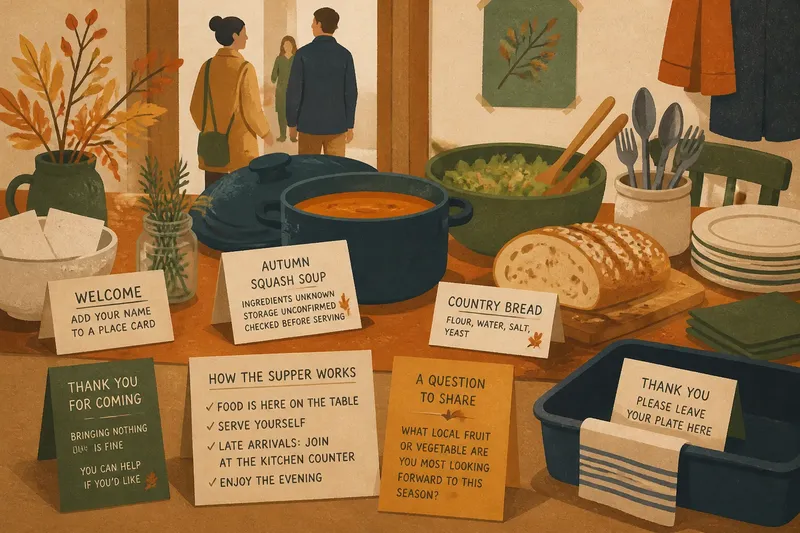
A person arriving alone can feel conspicuous in a room full of busy conversation. Set out a small, optional task near the entrance: add a name to a place card, put a sprig of rosemary in a jar, or help arrange bread on a board. It gives hands something to do and creates a natural opening line.
Choose a task that takes no special skill and can be left unfinished without causing trouble. The point is not to recruit a workforce. It is to make the first few minutes easier to enter.
Make the contribution table easy to read
Lay out serving spoons, plates, and napkins before guests arrive, with a small card naming each dish and listing ingredients the contributor can confirm. Put drinks somewhere that does not block the food line. These modest cues help people serve themselves without needing to ask the host every time they reach for a bowl.
Invite contributions by role as well as by recipe: something savory, something to drink, or help with clearing. That lets people choose according to time, kitchen access, and comfort. If a dish’s ingredients are unclear, ask the contributor rather than guessing; if its preparation, storage, or serving conditions are uncertain, keep it separate from other food and consult current local public-health or food-safety guidance before serving it. Do not label a dish as suitable for a particular allergy or dietary need unless that information is known and can be stated accurately.
- Check whether the contributor can confirm the dish’s ingredients; if they can, write them on the card, and if they cannot, mark the ingredients as unknown and ask the guest to decide whether to eat it.
- Check whether the contributor knows how the dish was stored and transported; if they can describe its handling, follow relevant local food-safety guidance, and if they cannot, keep it apart and seek guidance before serving.
- Check whether a dish needs special serving or storage instructions; if those are known, display them and follow them, and if they are uncertain, do not leave the dish out for guests until you have checked current local guidance.
- Check whether serving utensils are dedicated to each dish; if they are, place them beside the matching dish, and if they are not, add separate utensils before opening the table to reduce mix-ups.
- Check whether a guest has asked about an allergy or dietary restriction; if you can provide reliable ingredient information, share it plainly, and if you cannot, say so and let the guest choose another option.
- Check whether the table card makes a safety claim you cannot verify; if it does, remove the claim and replace it with confirmed information, and if it does not, leave the clear, limited label in place.
Leave room for different ways of joining in
Not everyone wants to speak to the whole room, stay for the entire meal, or contribute food. Make space for quiet participation by keeping a few seats at the edge of the table and letting people arrive or leave without an announcement. A supper can be communal without turning into a performance of sociability.
Say plainly that bringing nothing is fine. If you need help with a particular task, ask for it directly rather than assuming that a guest who is quiet wants to be assigned one. Good hospitality offers a way in, not a test to pass.
Begin with a short, shared pause
Once people have found seats, offer a brief welcome and explain the simple rhythm of the meal: where food is, how serving will work, and whether anyone needs to leave room for a late arrival. Then pause before inviting people to eat. The quiet moment marks a transition from milling about to sharing the table, without demanding a speech or a formal toast.
Say you are hosting an invented neighborhood autumn supper. One guest brings soup but cannot confirm how it was stored; another brings bread with a written ingredient list; a few people will arrive after work. You keep the soup separate and check current local food-safety guidance before deciding whether to serve it, place the bread card beside its dish, and tell late arrivals they can join from the kitchen counter. The observable result is a clear choice about the uncertain soup, useful information for guests, and a meal that does not require everyone to arrive at once.
Use one low-pressure conversation prompt
Conversation can start with the season rather than personal disclosures. Ask what local fruit or vegetable people look forward to, which nearby path looks best after rain, or what dish belongs in a cold-weather meal. Leave the question open; no one needs to answer in turn.
A prompt works best when it invites small observations, not a debate that takes over the table. If talk is already flowing, let it go. The prompt is a bridge for a quiet patch, not a program the guests must follow.
Make clearing part of the goodbye
As the meal winds down, put a dish tub or clearly marked tray where guests can leave plates. Invite people to help if they wish, then make sure someone is still available to say goodbye at the door. Clearing together can feel companionable, but it should not turn a guest’s departure into an obligation to wash up.
Before people leave, mention any useful next point of contact: where leftovers will go, how to return borrowed dishes, or when the next seasonal gathering is likely to be discussed. Keep the invitation open-ended, so a friendly meal does not become an implied commitment.
What should a community supper invitation explain?
Should guests bring a dish?
Say whether contributions are welcome, then offer alternatives such as drinks, fruit, setup help, or no contribution. This keeps the invitation accessible to people with different schedules and resources.
How can a newcomer join the conversation?
Place a simple seasonal prompt on the table and make the first task optional. A host can also introduce people through a shared local connection, without requiring a round of personal introductions.
What if someone arrives late?
Set aside a serving area or ask a guest to point out the food. Mention in the welcome that late arrivals are expected and can join without interrupting the meal.
How formal should the supper feel?
Let the invitation and the room’s setup signal the tone: familiar dishes and shared serving suit a relaxed gathering, while a seated meal may call for clearer timing. Either way, community supper rituals work best when they help guests participate without adding ceremony for its own sake.
The most useful ritual is often the one people barely notice: a visible place for a coat, a clear path to the food, or a host who remembers to greet the person standing by the door. For the next community supper, choose one small custom that answers a real point of uncertainty, and make food information as clear as the route to the table. That leaves guests freer to enjoy the gathering and make its customs their own.